THE SHORT ANSWER
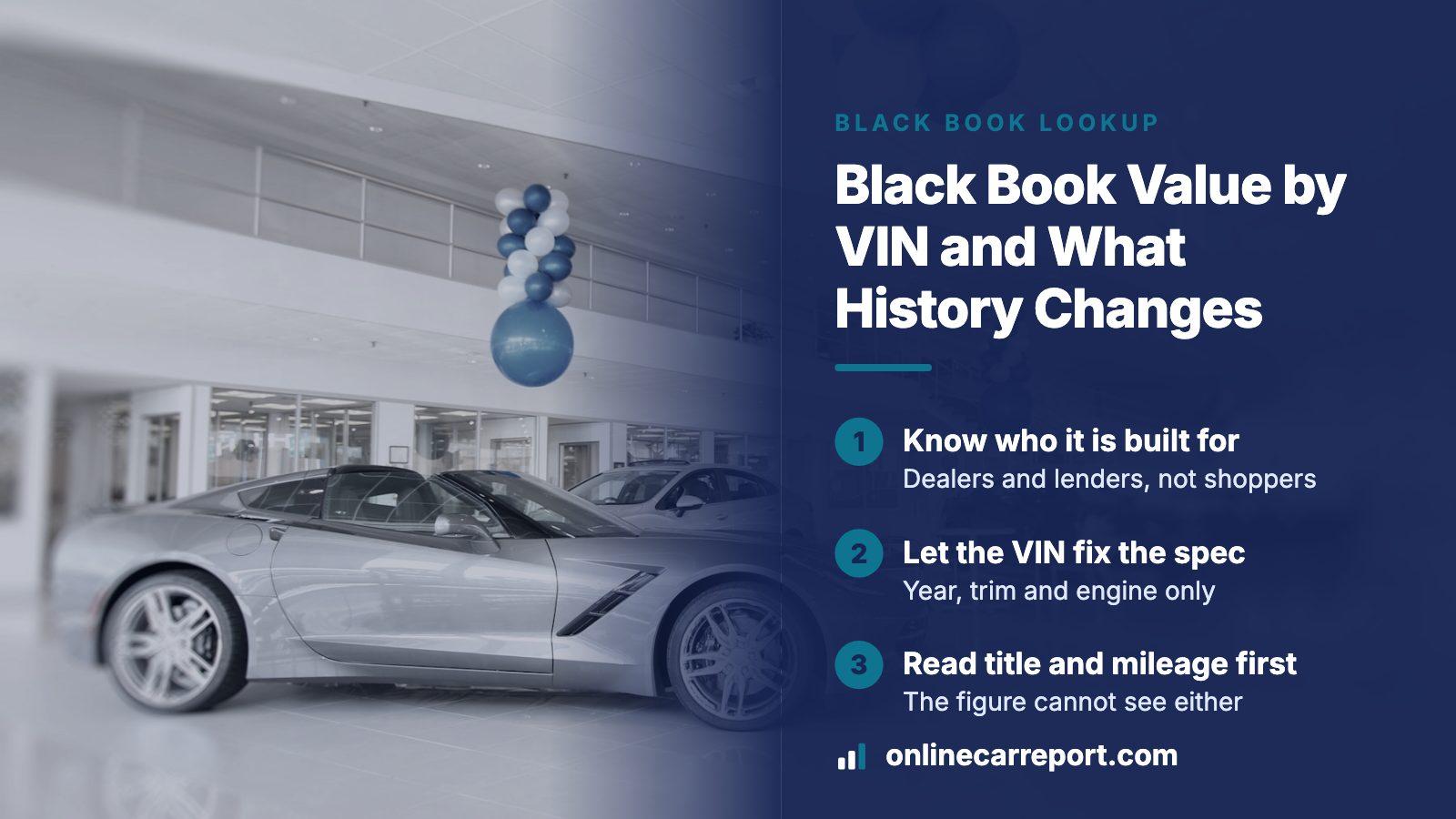
Black Book can price a car from its VIN, though its own pages are written for dealers, lenders and manufacturers and describe a login and a purchase route, not a shopper's lookup. The VIN fixes year, trim and engine; mileage, condition and region supply the rest. None of it sees a salvage brand or a rolled-back odometer, so read the title and mileage records first, then mark the figure down.
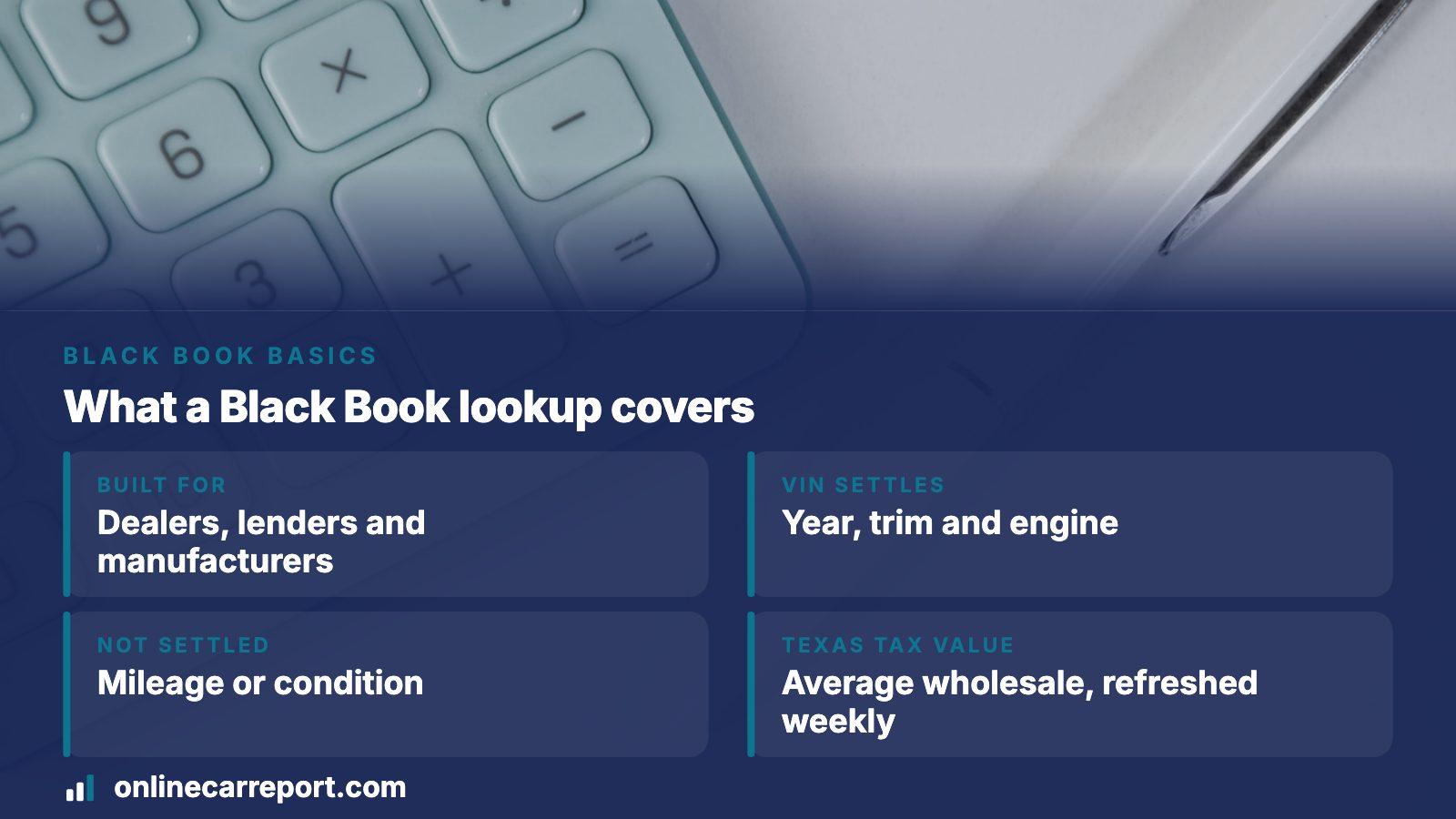
- Built for
- Dealers, lenders and manufacturers, by its own account
- What the VIN settles
- Year, trim and engine, not mileage or condition
- Texas tax value
- Black Book average wholesale, refreshed weekly
- Preview
- Free; the full report is one payment
What a Black Book lookup by VIN settles, and who it is made for
Seventeen characters narrow a car down to one build. Black Book describes a matching step that ties a VIN to a single trim, with the add and deduct amounts that belong to it, and NHTSA's public decoder, vPIC, does the basic version of that job for model years from 1981 on.
Everything after that is input. A VIN stores no mileage, no condition and no sense of where the car will sell, so every figure rests on answers you supply. Black Book's pages address dealers, lenders and manufacturers, and the vehicle values page offers a login and a way to buy while describing no lookup for shoppers.
Which Black Book figure answers your question
| Vehicle type | Figures Black Book lists | Where you would meet them |
|---|---|---|
| Cars, SUVs, light-duty trucks | Wholesale, retail, trade-in and private party, plus a wholesale residual value | Buying, selling or trading in an everyday vehicle |
| Medium and heavy-duty trucks | Wholesale and retail | Work-truck and fleet deals |
| Powersports | Trade-in, wholesale and retail | Bikes and other recreational machines |
| Collectible cars | Retail | Enthusiast purchases |
| RVs | Wholesale and retail | Campers and motorhomes |
The page names these figures without defining them, so ask whoever quotes one which it is. Wholesale describes the trade end of the market and retail the price on a lot, so setting one against the other compares different things.
Where a Black Book number reaches Texas buyers
Texas gives the clearest public glimpse of Black Book at work. The state's standard presumptive value is its estimate of what a vehicle is worth, taken from similar sales in the region, and TxDMV names Black Book as the guide that supplies it. The state works from the average wholesale price of used vehicles sold in Texas and refreshes it weekly.
It bites when you buy from anyone other than a licensed dealer. The 6.25 percent sales tax is charged on the purchase price or the presumptive value, whichever is higher. Dealer purchases use the price alone. The calculator asks for the VIN and the odometer reading, and neither describes a crash or a brand. The county tax office works out the real bill when the title is submitted.
A wholesale average built for a tax rule
That figure is not a retail asking price, and it does not appraise the car in your driveway. Use it to see how the state views the vehicle, and use the records to see how the car's own past views it.
Black Book itself says history moves the number
Black Book offers a product called History Adjusted Valuations for cars, SUVs and light-duty trucks. It starts from a VIN, takes a third-party history report, and feeds every event on that report into a model built from millions of vehicle transactions. Its own pitch says dealers otherwise adjust by hand from history reports, a step it calls subjective.
Read that as a plain admission. A value that has not been adjusted describes a car with an unremarkable past, and the page does not publish which events count or by how much. Until you have run the history, the number on your screen is a ceiling you still have to earn.
The records to pull before you trust any figure
| Record | What it tells you | What to do with the figure |
|---|---|---|
| Total-loss or salvage history | Repairs cost more than the car was worth, which is Texas's test for salvage | Discount from the clean-title number instead of paying it |
| Brand history | Salvage, junk or flood labels from any state, kept in the federal title database | Set the figure aside until you understand the brand |
| Odometer entries | A reading that stalls or drops against earlier titles | Rerun the number on the highest mileage you can support |
| Damage and auction photos | The car as it appeared when it went through the sale | Ask the seller to explain each difference |
| Open lien | A lender's claim that outlasts the sale | Hold payment until the release is in your hands |
The federal title database is deliberately narrow. It follows the title's current status and date, brand history, the odometer, and total-loss and salvage events, and is not built to hold repairs, upkeep or crash detail. The FTC makes a similar point about reports generally: they can surface wrecks and water damage but typically not mechanical trouble, so pay a mechanic of your own to look the car over.
What a missing history looks like after the sale
From an NHTSA owner complaint
An owner of a 2019 Ford Escape told NHTSA that the dealer sold the car with what the owner calls a "concealed total loss history". By that account, state title records show the odometer stuck at 73,539 miles across a Tennessee title from March 2025 and an Ohio title from January 2026, while a scanner puts the true figure past 86,278 miles. According to the complaint, a December 2024 crash led to a junk or salvage declaration at auction, and a rebuilt title followed without disclosure.
That is one owner's claim, not a finding. It shows how a plain value fails twice at once: priced on the lower mileage it runs high, and priced as clean it ignores the brand. A VIN check before signing lines up title dates and mileage readings, which is where a stall like that can show itself.
Running the check before you price anything
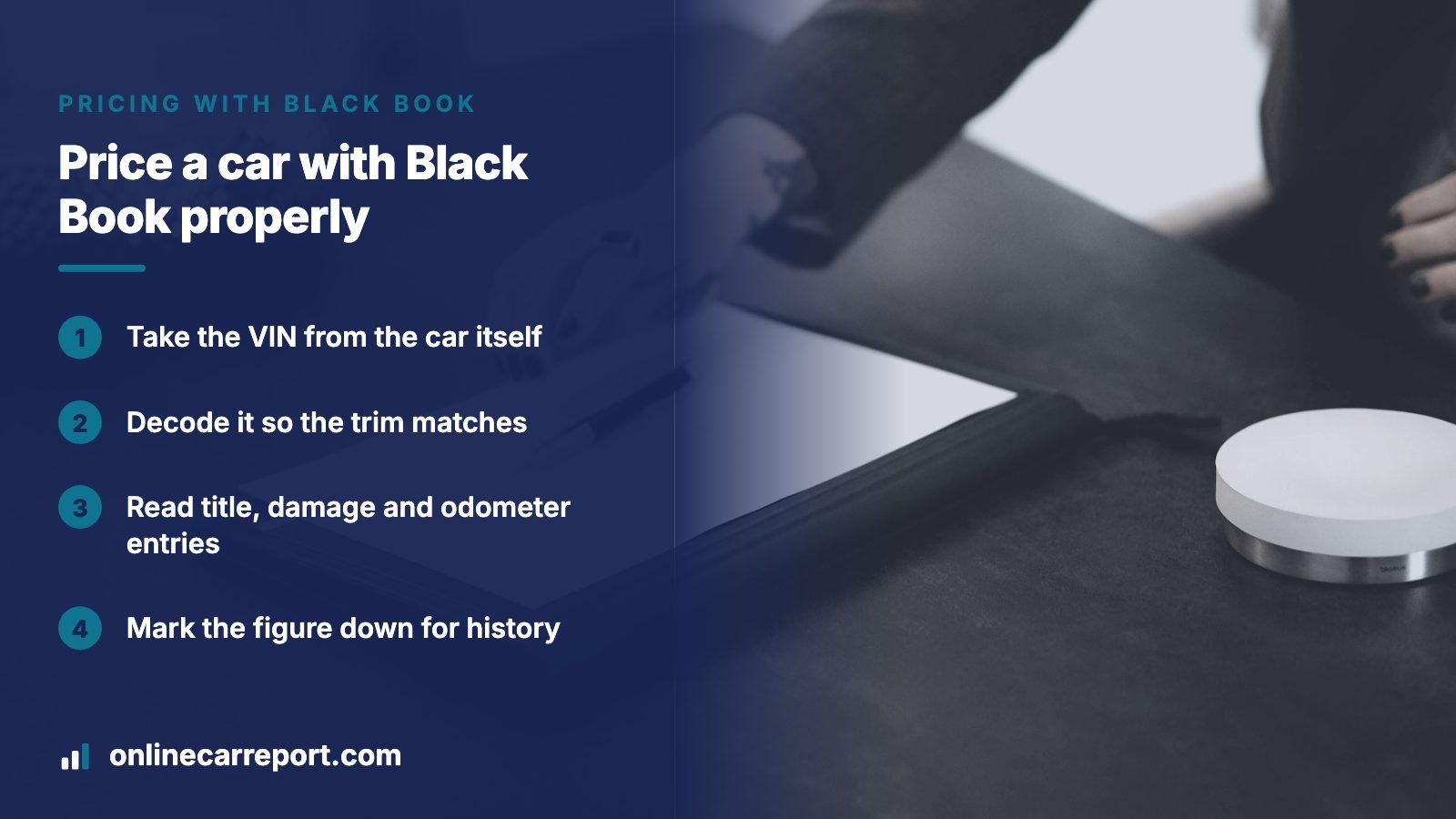
- Get the VIN from the car in front of you and ignore the one in the ad. Check the driver's-side dashboard corner nearest the windshield, or the label stuck to the driver's door or jamb, then compare it with the title or insurance card.
- Decode it with NHTSA's vPIC so the trim you price is the trim the factory built.
- Start the OnlineCarReport preview for that VIN. Nothing is charged at that stage.
- Read the title, brand, damage, auction and odometer entries before any price, and note what the seller left out.
- Take a mileage you can back up and an honest condition grade to the value source you prefer. In Texas, the presumptive value shows what the tax office will assume.
- Mark the figure down for what the records showed, then hire an independent mechanic to write up an inspection with repair estimates before you agree.
What the preview and the report cost
OnlineCarReport lets you preview any VIN at no charge. Paying is a single step, and you pick the size: one report, or a block of three, five or ten. Nothing recurs, there is no membership, and what each option costs is laid out on the pricing page. The report sets a market value beside the title, accident, odometer and auction records that move it. It is not a Black Book product and does not sell Black Book values.
If the records come back clean, a figure from your preferred source is a fair anchor. If not, you hold specific entries to cite when you ask for a lower price, repair paperwork or a different car.
Where this information comes from
- Black Book: vehicle values — The value types listed for each vehicle category, the VIN-to-trim matching step and the dealer, lender and manufacturer audience.
- Black Book: History Adjusted Valuations — How a history report feeds a VIN-specific value, and why dealers' manual adjustments are described as subjective.
- TxDMV: standard presumptive value calculator — Black Book as the supplier of Texas tax values, the weekly refresh and the VIN and odometer inputs.
- NMVTIS: understanding a vehicle history report — The five indicators the federal title database covers and what it leaves out.
- FTC: buying a used car from a dealer — What history reports tend to miss and why a written mechanic's inspection still matters.
- NHTSA: vPIC VIN decoder — The federal decoder for confirming the factory build, for model years from 1981.
- NHTSA owner complaint 11761195 — owner experience, paraphrased
Sources and photos: Facts checked against the sources above in November 2026. Photos by Richard R, Annika Wischnewsky and Sasun Bughdaryan on Unsplash; diagrams by OnlineCarReport.
Keep reading
- Kelley Blue Book value by VIN: how the history changes the numberThe consumer-facing book, read against the same VIN and the same history.
- NADA value by VIN: the lender's book and what history does to itThe lender's book, and how the lender's number can differ from the price you agreed.
- Diminished value calculatorWhat an accident does to a car's worth even after a good repair.
- Sample reportSee how title, damage and odometer entries are laid out before you buy.
Frequently asked questions
Can I get a Black Book value from just a VIN?
The VIN pins down the build, but Black Book still needs mileage, condition and region, and its pages are aimed at dealers, lenders and manufacturers. In Texas, the state's tax calculator returns a value built from Black Book data once you enter a VIN and odometer reading.
Does a Black Book value account for a salvage or rebuilt title?
A plain value does not, because a VIN carries no title status. Black Book offers a separate history-adjusted product for cars, SUVs and light-duty trucks. Without it, treat the clean figure as an upper limit and mark it down after reading the brand and damage records.
Why does a Black Book figure differ from other value guides?
Guides draw on different sales and describe different moments in a car's life. The Texas figure, for one, is an average wholesale price, not a dealer's retail sticker. Compare like with like, and read a gap between two guides as a range.
Does Texas use Black Book for sales tax?
For purchases from anyone other than a licensed dealer, yes. The presumptive value comes from Black Book data, and the 6.25 percent tax applies to the price or that value, whichever is higher. Dealer purchases use the price only, and the county tax office does the final sum.
What does OnlineCarReport show for my VIN?
A free preview comes first, then you can buy one report with title, accident, odometer, salvage and auction entries plus a market value. It is not a Black Book number. Run it before agreeing a price, then adjust whichever figure you use to fit the records.
Now check the car itself
The guide explains what to look for. The report shows what this VIN has on record.