THE SHORT ANSWER
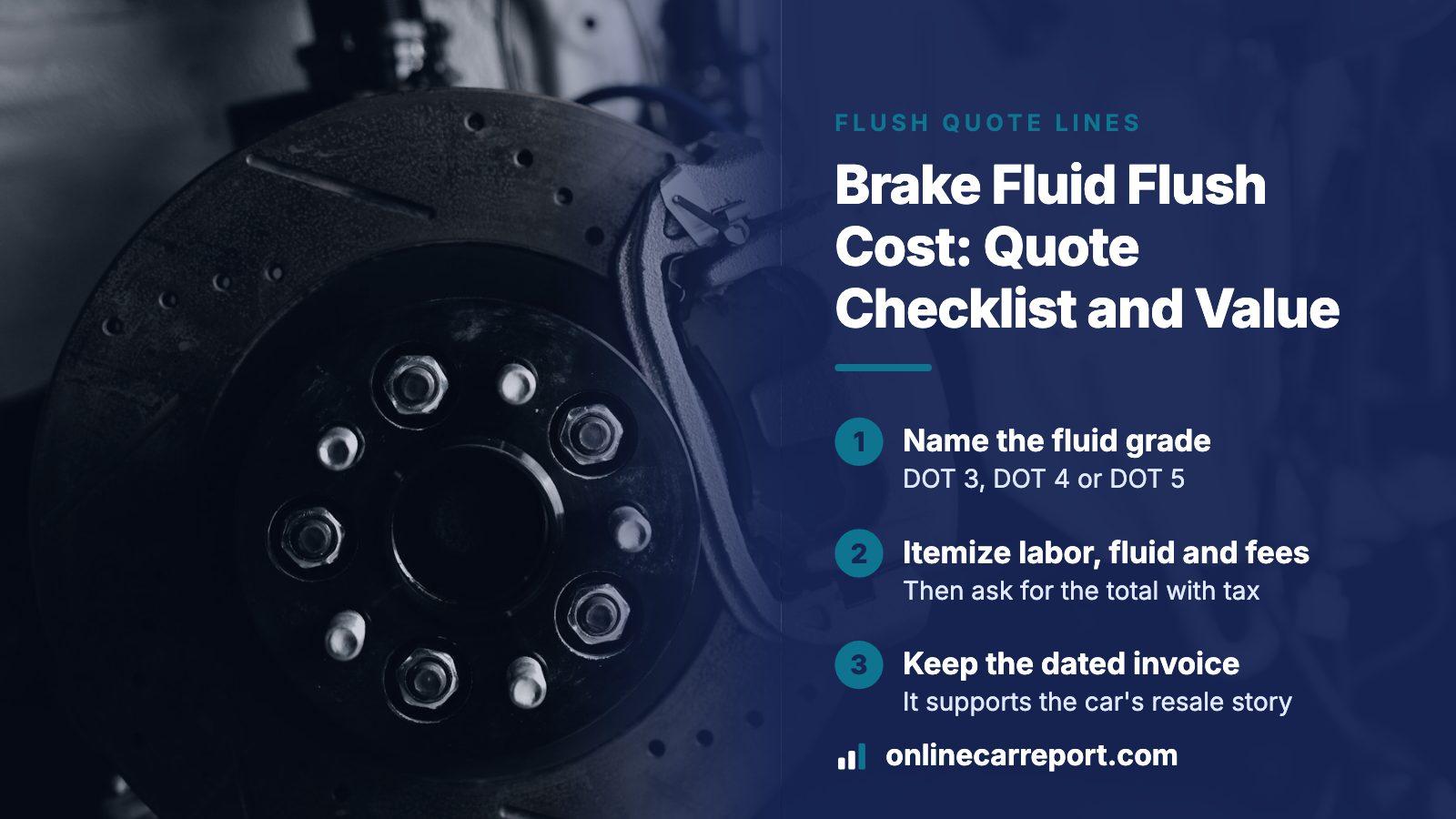
A flush quote is labor plus fresh fluid plus any shop fees, and the spread between shops comes mostly from the fluid grade and the labor rate. Ask for the grade by name, the work included and the total with tax. Keep the invoice. On a used car, a dated service record sits beside the title and damage history when a buyer weighs the price.
- Fluid grades on the market
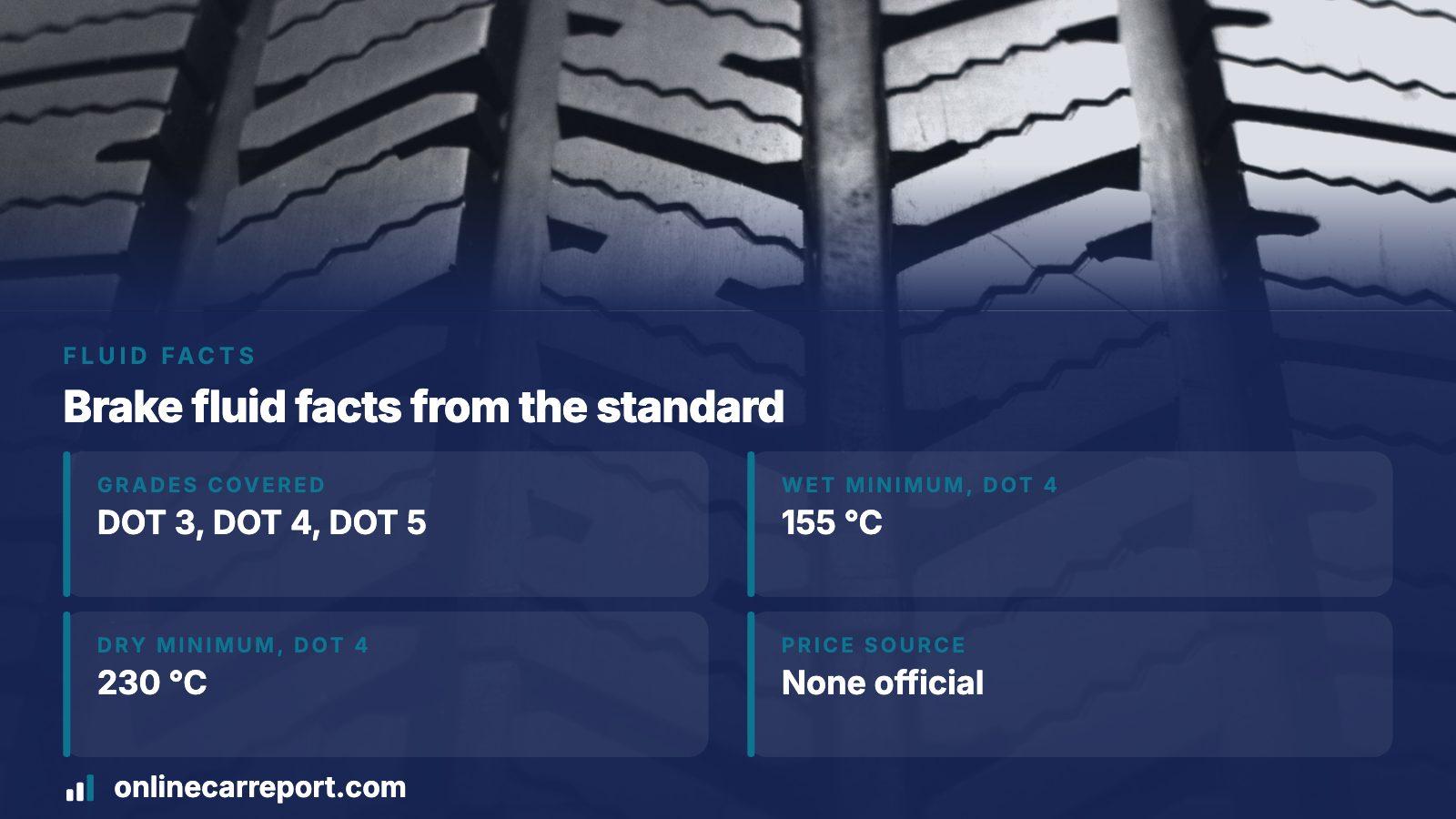
- DOT 3, DOT 4 and DOT 5 (silicone) are covered by the federal standard
- Wet minimum, DOT 4
- 155 °C, against 230 °C when dry
- Price source
- None from an official page; compare written quotes
The three lines that make up a flush quote
A flush replaces the old fluid in the brake lines with new fluid. The invoice for that job usually comes down to three things, and a shop that will not itemize them is hard to compare with one that will.
- The fluid itself: the grade, and how much goes through the system.
- Labor: the shop's hourly rate times the time it books for your car.
- Extras: shop supplies, disposal of the old fluid, tax, and any inspection fee.
Two quotes that look far apart are often one price with different lines left off. Put both on the same footing before you decide that one shop is gouging you.
Why this page prints no dollar figure
Federal pages cover brake fluid as a product and a safety item. They say nothing about what a shop charges to swap it. The consumer cost guides I tried to read for this page refused automated access, and I did not work around that. So there is no price here that I read and can vouch for.
What we could and could not confirm
Confirmed from the federal brake fluid standard: the grades, their boiling-point minimums and the container label rules. Not confirmed: any price, any interval in months, any labor time. Treat every number you meet elsewhere as an estimate for someone else's car.
Phone two or three local shops with your year, make and model, and ask for the out-the-door total in writing.
What the federal standard asks of the fluid
Federal Motor Vehicle Safety Standard 116 sets minimum boiling points for each grade twice: once for fresh fluid and once after the fluid has taken on water in a lab test. The wet figures run well below the dry ones, which is the whole argument for changing fluid on a schedule.
| Grade | Dry minimum | Wet minimum |
|---|---|---|
| DOT 3 | 205 °C (401 °F) | 140 °C (284 °F) |
| DOT 4 | 230 °C (446 °F) | 155 °C (311 °F) |
| DOT 5 (silicone) | 260 °C (500 °F) | 180 °C (356 °F) |
The wet figure comes from a lab procedure: the sample absorbs moisture in a warm oven until a reference fluid kept alongside holds 3.70 percent water. Fluid in a real car will not match that sample exactly, but the gap shows how much margin moisture can eat.
Which fluid belongs in your car, and why it moves the price
Fluid grade is the one line you can check against paper. The container has to name the grade and print its wet boiling point in Fahrenheit, and the label carries an instruction to follow the vehicle maker's recommendations when adding fluid. Your owner's manual or the reservoir cap settles which grade the car wants.
- DOT 3, DOT 4 and the non-silicone DOT 5.1 run colorless to amber.
- DOT 5 is a silicone base fluid, at least 70 percent diorgano polysiloxane by weight, and it is purple.
- A quote that says only 'brake fluid' has not told you which one you are buying.
Ask the shop to write the grade on the invoice. It costs them nothing and gives the next owner something to read.
How to compare two quotes line by line
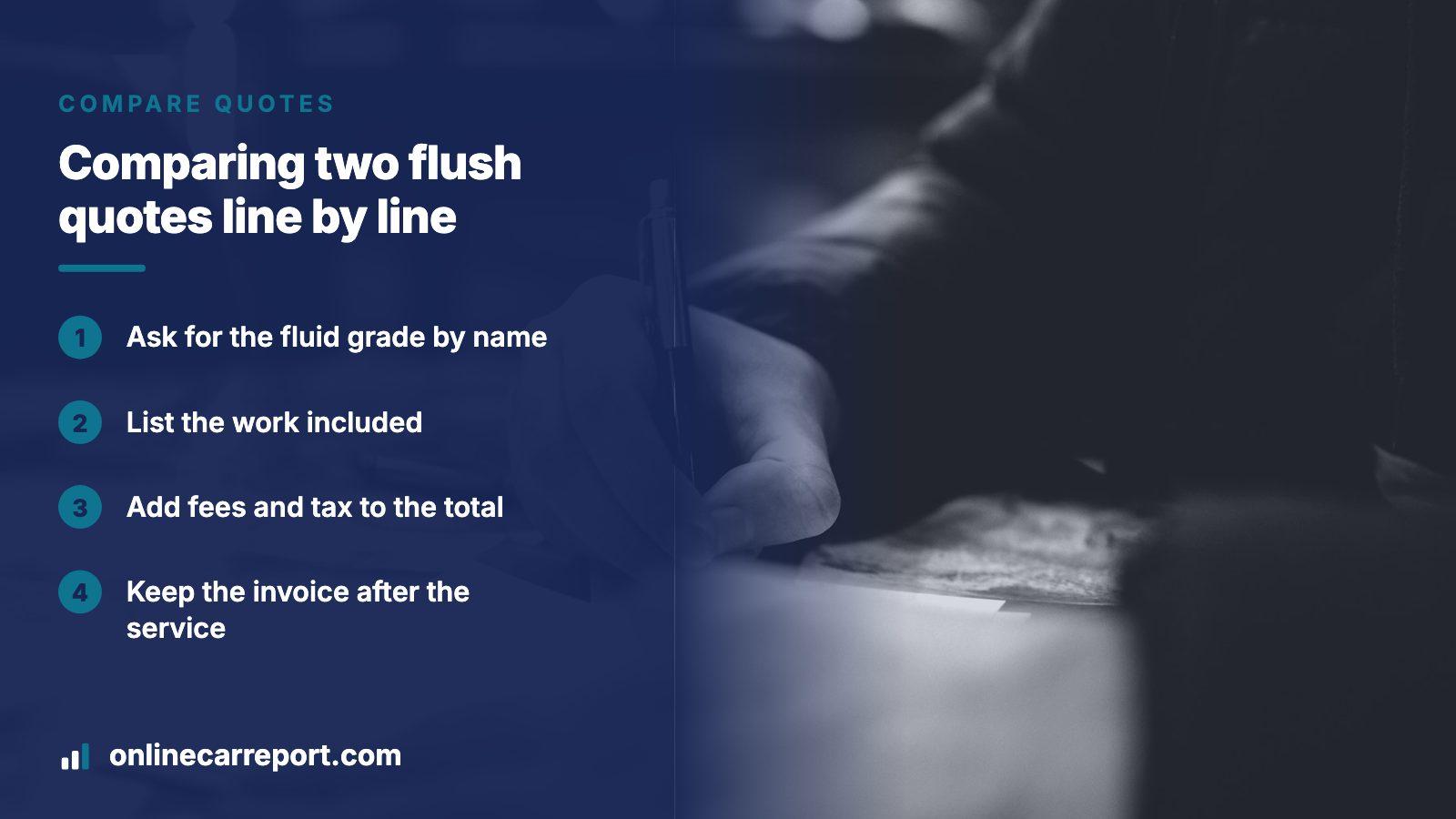
- Get the grade named, not just 'DOT fluid'.
- Ask whether the price covers every wheel or only part of the system.
- Ask whether the old fluid's condition is being tested first, and whether that test has its own fee.
- Ask for tax and shop fees in the total, not after it.
- Ask whether the bill will list the date and the odometer reading.
Be wary of a flush bundled with a larger package at a bargain, and of any shop that adds brake work you did not come in for without showing you the worn part. A flush on its own is a short job; if the estimate grows, ask what changed.
Why shops push the service at all
Every container must carry a warning that dirt, water or petroleum products getting into the fluid can lead to brake failure or costly repairs, plus a reminder to keep the lid shut so moisture stays out. That is the reasoning behind a scheduled flush: fluid that has been open to humid air is not what the standard tested.
It also means the mileage on the car is a poor guide by itself. Your manual lists what the maker wants, and that list beats any shop's rule of thumb or a lobby poster.
Check recalls before paying for brake work
If the pedal feels odd, the cause may be a safety recall handled by the maker, and a flush will not cure that. NHTSA's lookup takes a VIN and reports any unrepaired recall on that car, but leaves out recalls already fixed or maker campaigns that are not safety recalls.
The lookup also accepts up to 100 VINs in one search, which matters if you are shopping several used cars. Find the 17-character number at the base of the windshield on the driver side, or on your registration card.
What a flush does for the car's resale value
A flush does not raise a market value on its own. What it does is give a buyer something concrete to read. Brake fluid service is one more dated line in a car's history, and a buyer reads that line next to the title status, the damage records and the odometer entries.
Keep the paper
File the invoice with the date, mileage, fluid grade and shop name. When a buyer asks what has been done, a document answers faster than a promise.
Value on a used car comes from the record behind it: a clean title and a consistent odometer carry more weight than any one maintenance receipt.
Run the VIN before you budget for brake work
Buying a used car, you want to know about brake trouble before you sign. A VIN report from OnlineCarReport shows the title brand, any accident and damage entries, odometer readings and open recalls, which tells you whether the brake work you are pricing is routine upkeep or the sign of something larger. The preview is free, and a full report is a single payment; the pricing page lists the options.
Selling instead, the same report is what a buyer is going to look at, so seeing it first lets you set a price you can defend.
Where this information comes from
- 49 CFR 571.116: FMVSS 116, motor vehicle brake fluids — Boiling-point minimums by grade, the wet test, fluid colors and the container label rules.
- NHTSA: Check for recalls — What the VIN recall search shows and leaves out, and where the VIN is printed.
Sources and photos: Facts checked against the sources above in November 2026. Photos by Erik Mclean, Owen Michael Grech and fr0ggy5 on Unsplash; diagrams by OnlineCarReport.
Keep reading
- Car value by VIN: what the number tells you and how history moves itHow a car's market value is set before any repair bill is counted.
- Honda Civic brake replacement cost and what a brake job does to resaleA fuller look at a brake job on one popular car, with recalls to check.
- Toyota Camry brake replacement cost, and what brake history does to valueBrake costs and known brake campaigns on another common used car.
- Diminished value calculatorHow a damage record, not upkeep, changes what a car is worth.
Frequently asked questions
How much does a brake fluid flush cost?
No federal or state page sets a price, and I could not confirm one from an official source. Quotes vary with the fluid grade, local labor rates and what the shop includes. Call a few shops, give them your car's year and model, and ask for the total in writing, with tax.
Is a brake fluid flush the same as a brake fluid change?
Shops use the words loosely. Ask what the price covers: whether old fluid is pushed out of every line or only topped off, and which grade goes in. The invoice should name the grade and the date so you can see exactly what was done.
Can I use any DOT fluid in my car?
No. Grades differ in chemistry and in boiling-point minimums, and DOT 5 is a silicone base, a different material from the others. The container label tells users to follow the vehicle maker's recommendations, so match your manual or the reservoir cap.
Does a flush show up on a vehicle history report?
Not usually. A history report is built from title, damage, odometer, auction and recall records, not shop receipts. That is why you keep your own invoice with date and mileage, and show it to a buyer next to the report.
Should I check for a recall before paying for brake work?
Yes. NHTSA's search by VIN shows whether the car has an unrepaired recall. A brake symptom tied to an open recall is a separate matter from fluid service, so find out which one you are dealing with before paying.
Now check the car itself
The guide explains what to look for. The report shows what this VIN has on record.