THE SHORT ANSWER
A coolant flush bill is labor, new coolant and any shop fees, and the spread between shops comes mostly from the labor rate and the fluid used. Get the work itemized in writing, check it against the maker's schedule in your manual, and keep the dated invoice. If the real issue is a leak or overheating, a flush will not fix it, and the repair that follows is what moves a used car's price.
- Official price
- None published; compare written quotes
- Where the schedule lives
- The maker's maintenance schedule in your owner's manual
- Not a leak fix
- A sweet, steamy smell points to a coolant leak that needs diagnosis
Why no government page can tell you the number
Shops set their own labor rates and buy their own coolant, which is why the federal consumer pages on auto repair explain how to price a job instead of listing a price for it. The Federal Trade Commission notes that some shops bill a flat-rate labor figure drawn from a published time estimate, while others bill the time the technician actually spent. Those two methods can give different totals for the same car on the same afternoon.
I could not confirm a dollar amount for a coolant flush from any official page I opened, so this page prints none. Treat any single number you read, including on shop websites, as a starting point for your own phone calls, and ask each shop what its total covers before you compare.
The lines a written quote should carry
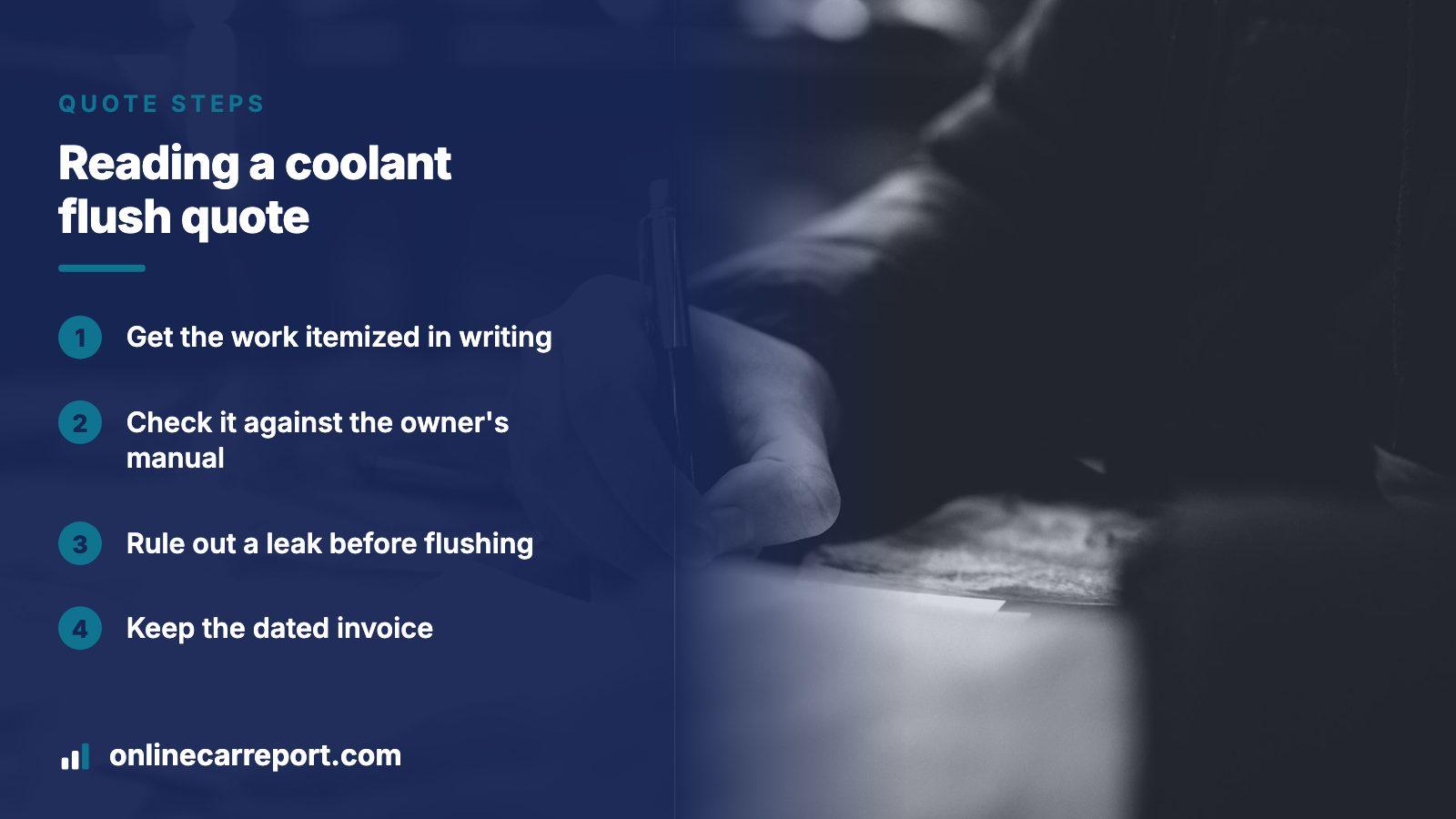
The FTC advises getting the estimate on paper, signed, with the problem, the parts and the projected labor spelled out. For a flush, that translates into plain items you can check line by line.
- The coolant: the product, the mix and how much goes in.
- Labor: the hourly rate or flat-rate time the shop books for your engine.
- Extras: disposal, supplies, tax and any inspection fee.
- A statement that the shop will call you before going past the quoted amount.
Two quotes that look far apart are often the same work with different lines left off. Put them side by side before deciding one shop is overcharging.
Match the service to the manual, not the shop's menu
The FTC points owners to the service intervals printed in the owner's manual for their kind of driving. It also cautions that some shops write their own schedules, calling for work sooner than the maker does, and suggests making the shop justify anything past what the manual says.
From an NHTSA owner complaint
An owner of a 2014 Jeep Grand Cherokee wrote that the dealer visit was meant to chase an extended-start problem. By the owner's account, the service desk seemed more interested in selling other work, a coolant flush among it, some of which had already been done. The owner also believed an open recall applied to the car.
The takeaway for you: write down the symptom you came in for, and ask how each extra item connects to it or to the manual's schedule before you approve it.
When a flush is the wrong answer
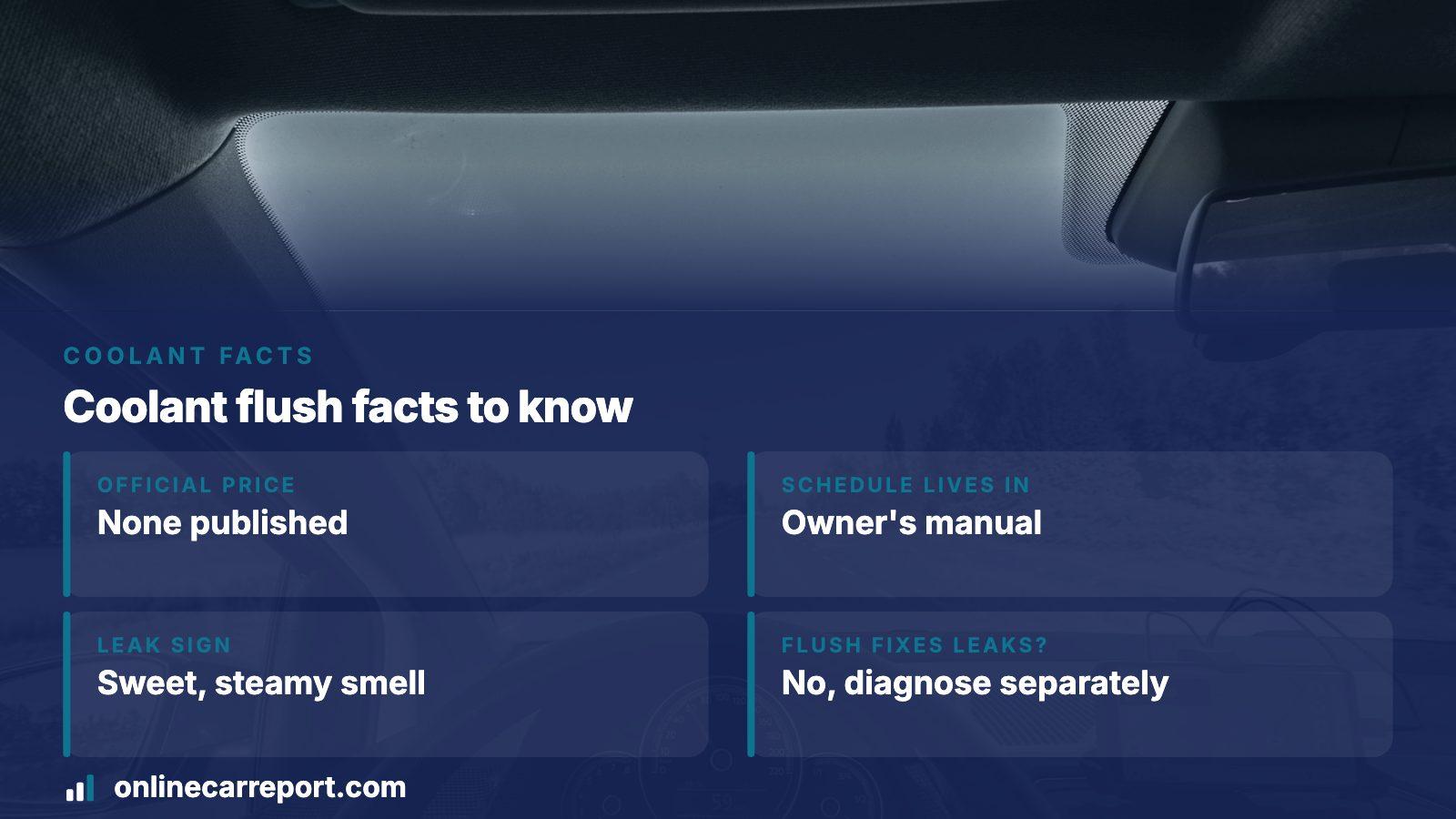
Fresh coolant does nothing for a system that is losing fluid. The FTC says a sweet, steamy odor means coolant is escaping, and that a puddle in yellowish green, pastel blue or fluorescent orange points to a failing hose, pump or radiator, or to an engine that ran hot. If steam and a hot metallic smell join in, the engine has overheated and the advice is to pull over at once and have the car towed, since continued driving could cause severe engine damage.
From an NHTSA owner complaint
The owner of a 2013 Ford Escape reported puddles under the parked car, about a gallon of coolant gone in a week and the temperature warning light on. The dealer's answer, as the owner recounted it, was that the coolant needed to be flushed. The complaint lists the failure mileage as 119,000.
Ask for a pressure test or a leak diagnosis first when fluid is disappearing. A flush quote and a repair quote are different documents, and paying for the first does not settle the second.
Handling the old fluid
Antifreeze is built on ethylene glycol, which the Agency for Toxic Substances and Disease Registry describes as odorless but sweet tasting. Because antifreeze is also vividly colored, children and pets may drink it, and a big dose can bring serious illness or death. The agency advises keeping bottles off the ground and away from where children can reach them, avoiding spills on the ground, and seeking medical attention quickly after any known or suspected swallowing.
If you drain the system yourself, that is a reason to be careful about where the old fluid goes. If a shop does it, a line on the invoice about disposal is reasonable to expect.
What a flush invoice does for the car's value
A buyer weighing a used car looks at condition, mileage and records together. A dated coolant invoice is a small piece of evidence, but it sits well beside other upkeep receipts. The FTC suggests collecting a finished repair order that itemizes every repair, part and labor charge, along with the mileage logged at drop-off and at completion. The mileage entries matter most here, because they pin the service to a moment in the car's life.
| Record | Where it comes from | What it supports |
|---|---|---|
| Coolant service invoice | Your shop | Upkeep was done, with date and mileage |
| Odometer readings | Title and inspection records | Whether the mileage story holds together |
| Accident and damage records | Insurers, auctions, police | Whether the car was hit or declared a loss |
| Title brands | State records | Whether the car carries a salvage or similar brand |
A vehicle history report is built from the last three rows, not from shop receipts. So the invoice and the report answer different questions, and a seller who shows both is easier to trust.
Before you pay for cooling work on a car you are buying
Suppose a seller tells you the radiator fluid was changed last month. Treat that as a claim to test. Fresh coolant can sit in a system that has overheated before, and a flush says nothing about whether the car has been in a crash or carries a brand on its title.
Start with the VIN. NHTSA points to the lower corner of the windshield on the driver's side, the registration, and sometimes on the insurance card. The agency's recall search by VIN lists unrepaired recalls only. It leaves out recalls already fixed, safety recalls more than 15 years old and service campaigns from the manufacturer that fall outside safety recalls, so it is a partial picture.
Where the VIN check on this site fits
On OnlineCarReport you type in the VIN and see the free preview before deciding anything. The report is paid for once and never turns into a recurring charge, and you can compare what is offered on the pricing page. For a car with a recent cooling repair, the sections to read are accident and damage entries, odometer readings and title brands, because those are the records that change what the car is worth and that a coolant invoice cannot show.
- Set the report's odometer history against the mileage written on the shop invoice.
- Look for an accident or auction record that could explain recent engine-bay work.
- Read the title section before negotiating on any upkeep claim.
If the report is clean, the invoice becomes a useful bargaining point rather than a talking point from the seller.
Where this information comes from
- FTC Consumer Advice: Auto repair basics — Estimate contents, how shops bill labor, following the owner's manual schedule, and coolant leak signs.
- NHTSA: Check for recalls — What a VIN recall search shows and leaves out, and where the VIN is printed.
- ATSDR: Ethylene glycol ToxFAQs — Why antifreeze needs careful storage and cleanup.
- NHTSA owner complaint 11141896 — owner experience, paraphrased
- NHTSA owner complaint 11511933 — owner experience, paraphrased
Sources and photos: Facts checked against the sources above in November 2026. Photos by Willian Cittadin, Owen Michael Grech and Sander Jeurissen on Unsplash; diagrams by OnlineCarReport.
Keep reading
- Car value by VIN: what the number tells you and how history moves itHow a car's market value is set before any repair bill is counted.
- Brake fluid flush cost: what a quote covers and how it affects a used car's valueAnother fluid service where the quote lines and the invoice matter.
- Car AC recharge cost: what the bill covers and what it says about the carA similar look at a repair quote that can hide a leak.
- Honda Accord head gasket replacement cost, and what a leaking one does to valueWhat a serious cooling failure can cost on one common used car.
Frequently asked questions
How much does a coolant flush cost?
I could not confirm a price from any official source, and no government page sets one. Quotes depend on the labor rate, the coolant and the shop's fees. Call a few shops with your car's year and model, and ask for the total in writing.
How often should coolant be flushed?
Use the schedule in your owner's manual, since the FTC points owners to the maker's schedule for their type of driving. Shops sometimes recommend shorter gaps. If a shop's advice differs from the manual, ask it to explain the reason before you agree.
Will a coolant flush stop my car from losing coolant?
No. A flush swaps the fluid, it does not repair a hose, pump or radiator leak. If the level keeps dropping, you smell something sweet or the gauge climbs, get a leak diagnosis, and pull over at once if the engine overheats.
Does a coolant flush show up on a vehicle history report?
Normally not. Reports draw on title, damage, odometer and auction records, not shop receipts. Keep your own invoice with the date and mileage, and show it to a buyer next to the report.
Is used antifreeze dangerous to leave around?
Yes. It is sweet tasting and brightly colored, and swallowing larger amounts can cause serious illness. Keep it away from children and pets, avoid spilling it on the ground, and get medical help quickly if anyone may have swallowed any.
Now check the car itself
The guide explains what to look for. The report shows what this VIN has on record.